AI Automation for Professional Services Firms: Practical Business Applications
Coordinate client intake, project work and reporting while maintaining matter boundaries, professional review and approved scope.

Professional services automation connects the administrative work around client delivery: intake, scoping, documents, project tasks, approvals and reporting. AI can help organize and prepare information, but it should not replace the professional judgment of a lawyer, accountant or consultant. The design must preserve client authorization, confidentiality and the agreed engagement scope.
Identify friction across the client engagement
A firm can have a capable project tool and still depend on inboxes and spreadsheets to move work between sales, delivery and finance. A scope change may not reach the project plan. Staff may reuse an outdated document or prepare a report without knowing that a client approval remains outstanding.
Map the engagement from first inquiry through handover and billing. Identify what constitutes an approved instruction, who owns the matter or project and which record governs scope. Custom enterprise software can connect those controls when existing tools leave the handoffs fragmented.
Useful automation by stage
Client onboarding can collect agreed business information, create an internal checklist and route required checks to their owners. Document preparation can assemble approved templates and extract facts for review. Project coordination can create tasks from authorized requests, monitor milestones and remind reviewers about pending approvals.
AI can prepare a draft status report or help retrieve relevant internal knowledge. It should distinguish evidence from proposed language and keep client-specific material within its access boundary. Do not assume that a document from a previous engagement may be reused simply because an assistant can retrieve it.
A scope-to-delivery workflow
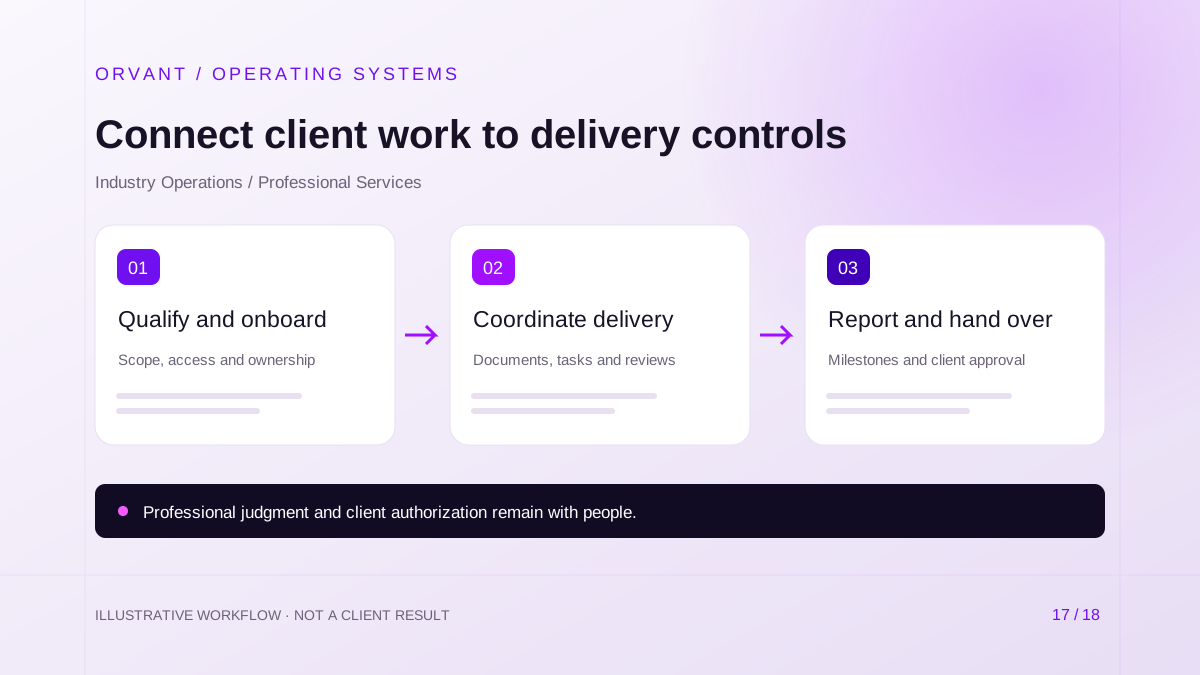
- Associate an inquiry or instruction with the correct client and engagement. Verify that the responsible professional has accepted the scope and required access.
- Create the project work, document workspace and approval tasks through approved interfaces. Keep the signed scope and subsequent changes traceable.
- Prepare review packages and status updates from verified project records. Release client-facing work only after the designated approval, and reconcile milestones with finance.
Microsoft's project contracts documentation illustrates contract-linked project billing structures. The actual engagement terms and professional obligations remain specific to the firm; an automation must not invent a billing basis.
Hypothetical scenario: an advisory project
For example, a consulting firm receives a client request that appears to expand a report's scope. The workflow summarizes the request, attaches the original message and creates a review task for the engagement owner. It does not automatically change the delivery date or promise additional work.
After approval, project tasks and reporting milestones are updated together. If the engagement owner rejects the change, the existing scope remains authoritative. This prevents a helpful drafting tool from becoming an unauthorized commercial decision-maker.
Examples for legal and accounting teams
A legal team could organize matter documents and prepare a chronology tied to source records, while a qualified lawyer reviews relevance and interpretation. An accounting firm could coordinate a client document checklist and draft a progress update while the responsible accountant verifies the work and conclusions.
Neither example implies automatic legal or accounting advice. Assess client confidentiality, conflicts, retention and applicable professional obligations with the responsible specialists. The document processing guide explains source traceability; the business intelligence guide addresses permission-aware internal knowledge.
Requirements for a maintainable implementation
Define client, matter and project identifiers, approval roles and authoritative scope records. Establish when information can be shared across teams and when it must remain isolated. Connect the CRM, project platform, document store and billing system only through permitted operations.
Budget for configuration, integration, template preparation, professional review, licenses and ongoing support. Assign responsibility for updating templates and access rules. A firm needs a way to withdraw outdated reference material and reconstruct which version supported a delivered report.
Evaluate value against delivery quality
Pilot one engagement type or administrative stage. Measure time spent assembling review packages, missing documents, overdue approvals and corrections to generated drafts. Include confidentiality and wrong-client retrieval tests, not only ordinary document searches.
Potential benefits include more consistent handoffs and less time rebuilding context. Evaluate whether the professional can inspect evidence faster without lowering review quality. Increased draft output is not by itself improved service delivery or realized financial savings.
Common questions
Can AI prepare a final client report autonomously?
It can support preparation, but final professional conclusions and release should follow the firm's approval process. The required judgment depends on the engagement and cannot be assumed from a model's confidence.
Should we automate every follow-up?
Use approved reminders for clearly defined administrative tasks. Sensitive client communications, scope changes and disputed matters need the engagement owner's review.
What should ORVANT review first?
Bring one recurring engagement and the points where instructions, documents or approvals get lost. An automation consultation can establish a controlled starting point without replacing the professional work.
Sources and further reading
Official references checked on October 28, 2026. These describe capabilities or considerations, not results achieved by ORVANT.
- Microsoft: Project contracts
Examples of contract-linked project billing controls, not professional advice.
Discuss the workflow behind your next improvement.
Bring your current process, system dependencies and operating constraints. We can discuss scope, feasibility, review controls and a practical pilot.
Discuss Your Project